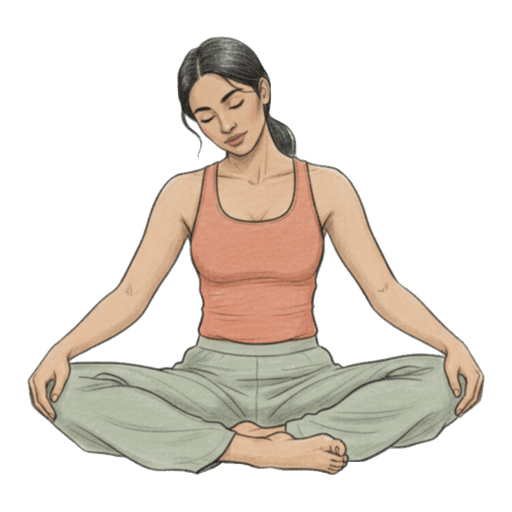
Why stretching matters as we get older
Staying flexible is less about touching your toes and more about staying independent. Harvard Health describes stretching as necessary for protecting mobility and independence, and points to the calves, hamstrings, hip flexors and quadriceps as key areas for staying mobile, along with the shoulders, neck and lower back 7.
Stretching works best as part of a bigger picture. The NHS advises adults aged 65 and over to be active every day, even if only lightly, to break up long periods of sitting, and to do activities that improve strength, balance and flexibility on at least two days a week 2. The National Institute on Aging groups exercise for older adults into aerobic, muscle-strengthening and balance activities, and notes that doing a mix helps reduce boredom and injury risk 1.
Balance deserves special mention. The World Health Organization reports that falls are the second leading cause of unintentional injury deaths worldwide, and that people aged 60 and over account for most of those deaths 6. It recommends tailored exercise that challenges balance and builds functional strength as a prevention strategy 6. Stretching on its own is not a balance programme, but it fits naturally alongside one, which is why this routine includes two simple balance moves.
Safety first: how to stretch gently
- Use the right chair. The NHS recommends a solid, stable chair without wheels, with your feet flat on the floor and knees bent at right angles 3. Avoid soft sofas and office chairs that roll or swivel.
- Keep support within reach. When you stand, do it next to a wall, kitchen counter or the back of a sturdy chair. The NHS suggests doing balance exercises near a wall or stable chair in case you lose your balance 4.
- Warm up first. A few minutes of walking around the house or marching in your chair helps. The NIA advises stretching when muscles are warmed up, remembering to breathe, and not stretching so far that it hurts 1.
- Go slowly and don't bounce. Ease into each position and hold it steadily. Bouncing can cause injury 7.
- Build up gradually. Start with a few repetitions and short holds, and add more over the weeks 5.
- Check first if unsure. If you have a heart or lung condition, joint replacement, osteoporosis, recent surgery, or have had falls, ask your doctor or a physiotherapist which stretches suit you.
9 gentle stretches for seniors
The first six are done sitting down. The last three are standing, with a hand on a wall or chair. Hold each stretch for 10 to 20 seconds to start, breathing slowly, and repeat two or three times per side. Over a few weeks you can build toward about 30 seconds 7.
Seated stretches
- Neck Rotation. Sit tall with your shoulders relaxed. Slowly turn your head to one side as if looking over your shoulder, keeping your head level. Return to the centre and repeat on the other side. Keep it gentle; there is no need to push with your hand if your neck is sensitive.
- Shoulder Rolls. Sit with a straight back. Lift your shoulders toward your ears, then roll them back and down in a smooth circle. Reverse direction halfway through. Keep the circles small if your shoulders are sore.
- Seated Upper Back Stretch. Sit tall near the edge of your chair, feet flat. Reach both arms forward at shoulder height, then round your upper back as if hugging a beach ball, spreading your shoulder blades wide. Keep your head lifted if your neck feels tender.
- Side Bend. Sit tall and raise one arm overhead, with the other hand on your hip. Gently lean to the side, reaching over with the raised arm, keeping both hips planted. If your shoulder is tender, rest your hand on your head instead.
- Seated Hamstring. Sit on the edge of the chair and extend one leg in front, heel on the floor and toes up. Sit tall and lean forward slightly from your hips until you feel a gentle stretch behind the thigh. If it feels too strong, sit a little more upright.
- Seated Figure Four. Sit tall and cross one ankle over the opposite thigh, just above the knee. Lengthen your spine and lean forward a little from your hips. If your knee feels strained, rest the ankle lower on your shin, or skip this one if crossing your legs is uncomfortable, for example after a hip replacement, unless your care team has said it is fine.
Standing stretches (with support)
- Leaning Calf. Stand facing a wall, about an arm's length away, hands on the wall at shoulder height. Step one foot back, keeping that heel down and toes forward, and bend your front knee until you feel a stretch in the back calf. If it feels strong, step the back foot a little closer to the wall.
- Heel-to-Toe Rocks. Stand tall holding a wall or the back of a sturdy chair. Slowly shift your weight forward onto your toes, lifting your heels, then rock back onto your heels, lifting your toes. Move steadily without sudden shifts.
- Single Leg Stand (balance). Face a wall with your fingertips resting on it. Lift one foot just off the floor, keep your hips level and hold for 5 to 10 seconds, then switch. The NHS describes a similar one-leg stand with fingertips on a wall 4. Keep the lifted foot close to the floor for more stability.
Summary of the routine
| Stretch | Position | Main area | Starting dose |
|---|---|---|---|
| Neck Rotation | Seated | Neck | 3 turns each side |
| Shoulder Rolls | Seated | Shoulders, upper back | 5 circles each direction |
| Seated Upper Back Stretch | Seated | Upper back, shoulders | 10–20 seconds, 2–3 times |
| Side Bend | Seated | Sides of the trunk | 10–20 seconds per side |
| Seated Hamstring | Seated | Back of thigh | 10–20 seconds per side |
| Seated Figure Four | Seated | Hips, glutes | 10–20 seconds per side |
| Leaning Calf | Standing, wall | Calves | 10–20 seconds per side |
| Heel-to-Toe Rocks | Standing, support | Ankles, feet | 8–10 slow rocks |
| Single Leg Stand | Standing, wall | Balance | 5–10 seconds, 3 per side |
Adding balance to your week
The NIA lists simple balance activities such as standing on one foot, the heel-to-toe walk, walking sideways and practising standing up from a sitting position, along with tai chi and yoga 1. The NHS balance routine includes sideways walking, a simple grapevine, heel-to-toe walking, a one-leg stand and step-ups, all done near a wall or stable chair, and suggests doing them at least twice a week 4. As you get steadier, the NHS suggests gradually relying less on the wall 4. If you feel unsteady at any point, stop and hold your support.
Making it a habit
Consistency matters more than intensity. Harvard Health recommends stretching daily if you can, or at least three or four times a week 7. Ten minutes at the same time each day, after your morning walk or before an evening TV programme, is easier to stick to than a long session you have to find time for. Linking stretching to something you already do is one of the simplest ways to make it stick; see how to build a stretching habit. If you are brand new to stretching, how to start stretching is a good companion read, and how often should you stretch covers frequency in more detail.
Keep a note of how each stretch feels. If one consistently causes pain, or if you notice new stiffness, swelling or dizziness, stop and talk to a healthcare professional.
How BendEase makes this easier
BendEase is designed so you don't have to remember steps or squint at instructions. During setup, you tap where you feel tight on a body map and tell it about sensitive joints such as your knees, lower back or wrists. It then leaves out stretches that load those joints and offers gentler options, and builds a personalised plan that adapts to your feedback.
A voice coach talks you into each pose, cues you through the hold and tells you when to switch sides, so you can focus on your body rather than a screen. Elizabeth and Cam are free; Emily, Isabel, Kai and Leo are included with Premium. If a bigger picture helps, the Apple TV app lets you stretch along on the big screen, and you can also run a routine from your Apple Watch. Your plan and progress sync across iPhone, Apple TV and Apple Watch with the same Apple ID.
The library has 200+ stretches with hand-drawn illustrations, and Premium adds guided video demos of every stretch. The free plan includes two coaches, illustrated stills, one guided routine a day and up to 3 custom routines of 6 stretches. Premium adds all coaches, videos, unlimited routines, and stats such as streaks and weekly goals. It costs $4.99/week or $89.99/year, and new users can unlock everything free for 48 hours with no card. BendEase is not medical advice, so check with your doctor if you have any health concerns.
References
- 1 https://www.nia.nih.gov/health/exercise-and-physical-activity/three-types-exercise-can-improve-your-health-and-physical
- 2 https://www.nhs.uk/live-well/exercise/physical-activity-guidelines-older-adults/
- 3 https://www.nhs.uk/live-well/exercise/sitting-exercises/
- 4 https://www.nhs.uk/live-well/exercise/balance-exercises/
- 5 https://www.nhs.uk/live-well/exercise/flexibility-exercises/
- 6 https://www.who.int/news-room/fact-sheets/detail/falls
- 7 https://www.health.harvard.edu/staying-healthy/the-importance-of-stretching
For gentle, guided routines you can follow from your chair, visit BendEase.