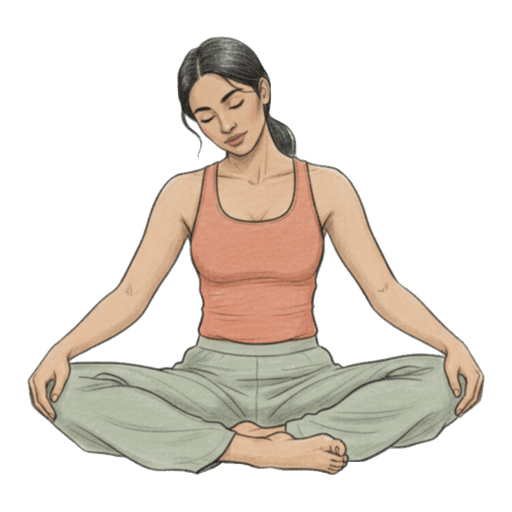
Understanding the Role of Static Stretching
It is essential to distinguish between the two primary types of stretching: dynamic and static. Dynamic stretching involves active movements where joints and muscles go through a full range of motion, often used to warm up before intense exercise 4 7. In contrast, static stretching involves holding a single position for a period, usually between 10 and 60 seconds. For a bedtime stretch routine, static stretching is the standard recommendation because it does not elevate the heart rate significantly and focuses on lengthening the muscle fibers in a controlled manner 4.
| Feature | Static Stretching | Dynamic Stretching | PNF Stretching |
|---|---|---|---|
| Primary Goal | Relaxation & Lengthening | Warm-up & Performance | Advanced Flexibility |
| Movement Type | Still / Held | Controlled / Active | Contract / Relax |
| Evening Suitability | High | Low | Moderate |
| Risk Level | Low | Moderate | Moderate to High |
When evaluating different methods, it is clear that static stretching aligns best with the goal of an evening wind-down. While dynamic stretching is superior for preparing the body for a workout, the stillness of static holds supports the transition to a resting state. The American College of Sports Medicine (ACSM) notes that static stretching is an effective way to increase flexibility and range of motion in a safe, low-impact way 8. Furthermore, static stretching allows for a focus on breathwork, which is a critical component of any relaxing stretches practice.
Physiological Foundations of Evening Movement
Engaging in a night stretching routine facilitates a physiological shift toward the parasympathetic nervous system, which is responsible for the body's "rest and digest" functions. Research indicates that low-intensity physical activity, such as static stretching, can help lower the body's stress response by reducing muscular tension 4 8. By focusing on slow, rhythmic movements and deep breathing, you can help facilitate this transition. Static stretching is particularly effective for this purpose because it focuses on stillness and the gradual lengthening of muscle fibers, which aligns with the goal of winding down 4.
The relationship between physical tension and mental stress is well-documented. By physically releasing the tension in the muscles, you provide a biofeedback signal to the brain that the environment is safe and the day's work is complete. This is why many practitioners find that a bedtime stretch routine is as much a mental exercise as it is a physical one.
Targeting Muscle Tension from Daily Activities
Daily life often places repetitive stress on specific muscle groups. For those who work at a desk, the neck, shoulders, and lower back are common sites of tension 3. The act of leaning forward to look at a screen or typing for extended periods can lead to a shortening of the chest muscles and a straining of the upper back. For those who are on their feet all day, the calves and hamstrings may feel tight due to the constant load-bearing.
The hip flexors often become shortened after hours of sitting, which can pull on the pelvis and affect lower back comfort 1. Similarly, the hamstrings can become tight, affecting your ability to move through a full range of motion during daily tasks 2. A well-rounded night stretching routine addresses these muscle groups to provide a sense of physical release.
Creating a Calming Space for Your Routine
The environment in which you stretch can significantly impact the effectiveness of your routine. Consider these factors when setting up your space for evening stretches:
- Lighting: Dim the lights or use soft, warm lighting to signal to your brain that the day is ending. Avoid bright overhead lights or blue light from screens.
- Temperature: Ensure the room is at a comfortable temperature. Being too cold can cause your muscles to tense up, while being too hot can be distracting.
- Sound: Choose a quiet space or play calming, low-volume music. Some people find that nature sounds help them focus on their breathing.
- Surface: Use a yoga mat or a carpeted floor to provide adequate support and cushioning for your joints.
By intentionally creating a calming environment, you enhance the psychological benefits of your night stretching routine. This holistic approach ensures that both your mind and body are prepared for a restful evening.
A 6-Step Night Stretching Routine for Relaxation
This routine is designed to be accessible and requires no special equipment. Ensure you move slowly and breathe deeply throughout the practice.
- Prepare your environment. Find a quiet space, dim the lights, and remove any distractions. Take three deep breaths to center yourself before beginning.
- Child’s Pose (Balasana). Kneel on the floor, touch your big toes together, and sit on your heels. Fold forward, laying your torso between your thighs and resting your forehead on the floor. Extend your arms forward. Hold for 30–60 seconds while focusing on deep breaths 5.
- Seated Forward Fold. Sit with your legs extended straight in front of you. Inhale to lengthen your spine, then exhale as you reach forward toward your feet. Keep a slight bend in your knees if your hamstrings feel tight. Hold for 30 seconds without bouncing 5.
- Butterfly Stretch. Sit on the floor with the soles of your feet together and your knees dropping out to the sides. Hold your ankles and gently press your knees toward the floor. Hold for 30–45 seconds 5.
- Neck and Shoulder Release. Sit comfortably with a straight spine. Slowly drop your right ear toward your right shoulder. Hold for 15 seconds, then repeat on the left side. Follow this with 10 gentle shoulder rolls 3.
- Legs-Up-The-Wall (Viparita Karani). Lie back and swing your legs up onto the wall so your body forms an "L" shape. Rest your arms at your sides and remain in this position for 2–5 minutes. This pose encourages circulation and provides a gentle release for the lower back.
How BendEase makes this easier
Integrating a new habit into your evening can be challenging, but BendEase simplifies the process with guided routines built around your body. The iPhone app features a library of 200+ stretches, each shown with a hand-drawn illustration. During setup, you tap where you feel tight on a body map, such as your shoulders or lower back after a long day, and tell it about sensitive joints like your knees or wrists so it leaves out stretches that load them and offers gentler options. It then builds a personalized plan that adapts to your feedback, so your night stretching routine stays suited to how your body feels.
A voice coach talks you into each pose, cues you through the hold and tells you when to switch sides, which means you can close your eyes and breathe instead of watching a screen. You can choose from six coaches: Elizabeth and Cam are free, and Emily, Isabel, Kai and Leo come with Premium. You can also save your own wind-down sequence; the free plan allows up to 3 custom routines of 6 stretches, along with two coaches, illustrated stills and one guided routine a day. Premium ($4.99/week or $89.99/year) adds all coaches, guided video demos of every stretch, unlimited routines and stats such as streaks, weekly goals and a body heat map to help you stay consistent, and new users can unlock everything free for 48 hours with no card. BendEase is a guide for gentle movement, not medical advice.
Ready to start your journey? Download BendEase today.
References
- 1 https://www.mayoclinic.org/healthy-lifestyle/fitness/in-depth/stretching/art-20546848
- 2 https://www.hingehealth.com/resources/articles/mobility-vs-flexibility/
- 3 https://www.mayoclinic.org/healthy-lifestyle/adult-health/in-depth/office-stretches/art-20046041
- 4 https://health.clevelandclinic.org/dynamic-stretching-vs-static-stretching
- 5 https://www.nhs.uk/live-well/exercise/flexibility-exercises/
- 6 https://www.nhs.uk/live-well/exercise/how-to-stretch-after-exercising/
- 7 https://www.heart.org/en/healthy-living/fitness/fitness-basics/warm-up-cool-down
- 8 https://pubmed.ncbi.nlm.nih.gov/21694556/