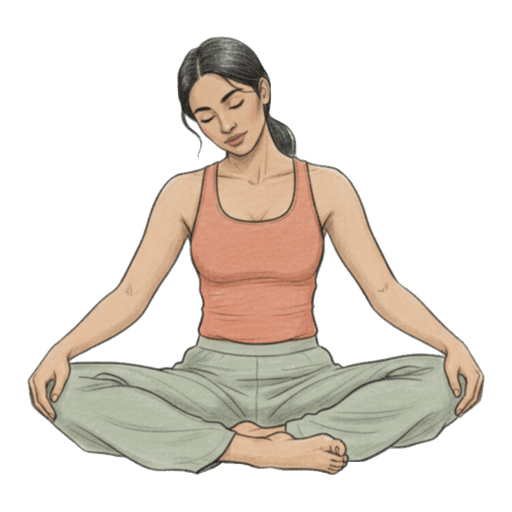
Desk stretches are the quickest way to undo a few hours of sitting still. This 5-minute routine works from the top down, in your chair: neck, shoulders, upper back, wrists, sides and hips, then one stand-up to finish. Each move is gentle, needs no equipment, and stops at mild tension, never pain.
This isn't medical advice — follow your doctor or physiotherapist. Stretching is general information, not a treatment. If you feel sharp pain, or pain, tingling or numbness that travels into your arm or hand, stop and see a clinician.
Quick answer
The desk stretches most often recommended by occupational health sources are chin tucks, a side neck stretch, shoulder rolls, a chest opener, wrist stretches, a side bend and a seated hip stretch (CCOHS, Mayo Clinic). Hold each for about 10 to 20 seconds, breathe normally, don't bounce, and get up to move at least once an hour.
Why sitting at a desk makes you stiff
Mayo Clinic explains that sitting at a desk for a long time can put a lot of stress on certain muscles, "especially in your neck, shoulders and upper back," which can leave you stiff and sore. Its answer is simple: take frequent breaks for some physical activity (Mayo Clinic).
The Canadian Centre for Occupational Health and Safety (CCOHS) makes the same point from the workplace side. Computer work "often involves very few changes in body position," and that lack of movement can lead to muscle pain and strain. It recommends a 5 to 10 minute break for every hour at a workstation, standing up and walking if you can (CCOHS).
Your hands do their own repetitive work too. The NHS lists typing and poor posture at work among the things that can lead to repetitive strain injury in the shoulders, forearms, wrists and hands (NHS). That's why this routine includes the wrists, which many desk routines skip.
None of this means you need a perfect way to sit. The US Occupational Safety and Health Administration says "there is no single 'correct' posture" that fits everyone (OSHA), and the Chartered Society of Physiotherapy puts it more kindly still: "your best posture is your next posture" (CSP).
The 5-minute desk stretch routine
Sit near the front of a sturdy chair without wheels if you can, feet flat on the floor. The times below add up to about five minutes. They're a guide, not a rule, so slow down or skip anything that doesn't feel right today. Each stretch links to its step-by-step page in the BendEase stretch library.
| # | Stretch | Body area | Rough time | What you should feel |
|---|---|---|---|---|
| 1 | Chin tuck | Neck | 30 sec | Length at the back of the neck |
| 2 | Ear-to-shoulder | Side of neck | 15 sec per side | A gentle stretch down the side of the neck |
| 3 | Shoulder rolls | Shoulders | 30 sec | Shoulders loosening and dropping |
| 4 | Seated chest opener | Chest, front of shoulders | 40 sec | The front of the chest opening |
| 5 | Upper back round | Upper back | 30 sec | Space between the shoulder blades |
| 6 | Wrist extension and flexion | Forearms, wrists | 40 sec | A mild stretch along the forearm |
| 7 | Seated side bend | Sides, spine | 15 sec per side | A long stretch down one side |
| 8 | Seated figure four | Hips, glutes | 20 sec per side | The outside of the hip opening |
| 9 | Stand up and move | Whole body | 30 sec+ | Blood moving, legs waking up |
Step-by-step: how to do each desk stretch
Neck
- Chin tuck. Sit or stand tall and, without lifting your chin, glide your head straight back. CCOHS calls this a head glide and says you're doing it right if it gives you the feeling of a double chin. Hold a few seconds, relax, and repeat about five times. See chin retractions.
- Ear-to-shoulder. Slowly tilt one ear toward the same shoulder and let the opposite shoulder stay heavy. The NIH's occupational health team suggests holding a neck side bend for about 15 seconds (NIH ORS). If you rest a hand on your head, let it just sit there rather than pull. See ear-to-shoulder.
Shoulders and chest
- Shoulder rolls. Slowly roll your shoulders backward in a circle five times, then forward five times, as CCOHS describes. Keep the circles smooth and your neck soft. See shoulder rolls.
- Seated chest opener. Sit forward from the back of your chair. With your thumbs pointing to the ceiling, open your arms out to the sides until you feel a stretch across the front of your chest, keeping your shoulders back and down and gently drawing your shoulder blades together. The CSP suggests holding for 20 seconds and repeating three times, and notes you should not feel pain or tingling in your arms. One or two rounds fits a 5-minute break. For a hands-behind-your-head version, see the seated chest opener.
Upper back
- Upper back round. Sit tall, reach both arms out in front at shoulder height and clasp your hands or let them touch. Round your upper back as if hugging a beach ball, letting your head drop gently. Hold for a few slow breaths. If your neck is tender, keep your head up and just reach forward. See seated upper back stretch, or try a bear hug instead.
Wrists and forearms
- Wrist extension and flexion. Reach one arm out in front, palm facing away, and use your other hand to gently ease the fingers back toward you. Then turn the palm down and let the fingers point to the floor, easing the back of the hand in. CCOHS suggests holding wrist stretches for 3 to 5 seconds and repeating three times, and warns not to force anything that is painful. Finish with a few slow wrist circles. See arm-out wrist extension and arm-out wrist flexion.
Sides and hips
- Seated side bend. Keep both sit bones heavy on the chair, raise one arm overhead and lean gently to the opposite side. Come back to the middle and switch. CCOHS describes a similar stretch with the fingers interlaced overhead. See side bend.
- Seated figure four. Cross one ankle over the opposite thigh, just above the knee, sit tall and lean forward a little from your hips until you feel the outside of the hip open. If your knee complains, rest the ankle lower on your shin. See seated figure four.
- Stand up and move. Stand, walk to refill your water or take a phone call on your feet. The CSP recommends breaking up sitting with a little movement every 30 minutes, and CCOHS says standing up and walking is ideal during breaks.
Only have one minute?
Pick the area that feels tightest and do just that part. Neck stiff after a long call? Do steps 1 and 2. Wrists achy after a day of typing? Do step 6. For a longer focus on one area, our guides to neck and shoulder stretches at your desk, hip flexor stretches for people who sit all day and lower back stretches go deeper.
When to stop stretching and get checked
Mild tension that eases as you move is normal. These signs are not:
| What you notice | What to do |
|---|---|
| Ordinary stiffness after sitting that eases as you move | Gentle desk stretches are a reasonable place to start |
| Sharp pain during a stretch, or pain that gets worse afterwards | Stop that stretch. If it keeps happening, see a GP or physiotherapist |
| Pins and needles, tingling or numbness in your arm, hand or fingers during or after stretching | Stop. CSP says you should not feel pain or tingling in your arms (CSP) |
| Neck pain or stiffness that hasn't gone after a few weeks, or comes with pins and needles or a cold arm | See a GP (NHS) |
| Wrist, hand or arm symptoms that aren't going away or are getting worse | See a GP (NHS) |
| Sudden or very bad shoulder pain, you can't move your arm, or pain after a fall or injury | Ask for an urgent appointment (NHS) |
| Chest pain that feels tight or squeezing, or spreads to your arms, neck or jaw | Call emergency services now. This is not a stretching problem (NHS) |
Mistakes to avoid
- Pulling on your head. CCOHS says not to pull or push excessively. Yanking your head to one side can leave your neck feeling worse than before. Let gravity do most of the work.
- Bouncing. Small bounces at the end of a stretch make it harder to feel when to stop. CCOHS advises against bouncing and against locking your joints. Ease in, then hold still.
- Holding your breath. It's easy to brace without noticing, especially when you're busy. CCOHS says to breathe normally, so let each breath out soften the stretch a little.
- Stretching through tingling. Tingling or numbness in the arm or hand is a sign to stop, not to push on. Keep wrist and neck stretches light.
- Stretching but never standing up. Stretching in your chair is a good start, but it doesn't replace getting up. CCOHS recommends standing and walking during breaks, and the CSP suggests moving every 30 minutes.
How BendEase helps
BendEase is a voice-coached stretching app for iPhone, Apple Watch and Apple TV. You tap where you feel tight, such as your neck, shoulders or back, and get a routine of about five minutes a day from a library of 200+ stretches, with one of six voice coaches talking you through each hold. You can also tell it what's sore, such as your wrists, knees or lower back, and it leaves out stretches that load those areas and offers a gentler option. It isn't medical advice and doesn't replace a clinician. If you'd like a desk-friendly routine that changes with your feedback, you can download BendEase on the App Store. It's free to start, with 48 hours of Premium to try and no card needed.
FAQ
How do I stretch while sitting at a desk?
Sit tall near the front of a sturdy chair with your feet flat, then work from the top down: chin tucks and a gentle side tilt for the neck, shoulder rolls and a chest opener, an upper back round, wrist stretches, a side bend and a seated figure four for the hips. Move slowly, breathe normally, and go only to a mild stretch.
How often should I do desk stretches?
Little and often works best. The Canadian Centre for Occupational Health and Safety recommends a 5 to 10 minute break for every hour at a workstation, ideally standing up and walking. The Chartered Society of Physiotherapy suggests moving a little about every 30 minutes.
How long should I hold a desk stretch?
About 10 to 20 seconds is plenty for most desk stretches, according to CCOHS. Some wrist stretches are shorter, around 3 to 5 seconds repeated a few times. Don't bounce, and ease off if the stretch turns into pain.
Can desk stretches fix bad posture?
There isn't one perfect posture to fix. OSHA says no single correct posture fits everyone, and physiotherapists say your best posture is your next posture. Stretches and regular position changes can help you feel less stiff, but they work best alongside a comfortable desk setup and regular movement.
What stretches help wrists from typing?
Gentle wrist extension and flexion stretches, wrist circles and a palms-together prayer stretch are common options. Keep them light and stop if you feel tingling or numbness. The NHS advises seeing a GP if hand or wrist symptoms are not going away or are getting worse.
Should I stretch if my neck hurts?
For everyday neck stiffness, the NHS suggests keeping your neck moving and trying gentle flexibility exercises rather than wearing a collar. See a GP if neck pain doesn't go away after a few weeks, or if you have pins and needles or a cold arm. Stop any stretch that causes sharp pain or pain that travels down your arm.
This isn't medical advice — follow your doctor or physiotherapist. If you feel sharp pain, or pain, tingling or numbness that travels into your arm or hand, stop and see a clinician.
Sources
- Mayo Clinic. Desk stretches: Video collection (23 April 2026). https://www.mayoclinic.org/healthy-lifestyle/adult-health/in-depth/office-stretches/art-20046041
- Canadian Centre for Occupational Health and Safety. Office Ergonomics – Stretching – At the Workstation (confirmed current 4 February 2025). https://www.ccohs.ca/oshanswers/ergonomics/office/stretching.html
- Chartered Society of Physiotherapy. Working from home: easy exercises. https://www.csp.org.uk/public-patient/keeping-active-healthy/staying-healthy-work/desk-based-exercises
- OSHA (US Department of Labor). Computer Workstations eTool. https://www.osha.gov/etools/computer-workstations
- NIH Office of Research Services, Division of Occupational Health and Safety. Exercises and stretches. https://ors.od.nih.gov/sr/dohs/HealthAndWellness/Ergonomics/Pages/exercises.aspx
- NHS. Neck pain. https://www.nhs.uk/conditions/neck-pain/
- NHS. Repetitive strain injury (RSI). https://www.nhs.uk/conditions/repetitive-strain-injury-rsi/
- NHS. Shoulder pain. https://www.nhs.uk/conditions/shoulder-pain/
- NHS. Heart attack. https://www.nhs.uk/conditions/heart-attack/